

Handmade wind chimes bring soothing acoustic resonance, movement, and visual character to any garden, balcony, or patio. Transforming everyday household objects and natural elements into melodic outdoor art allows you to customize the look, pitch, and acoustic tone of your space while keeping costs minimal.
Whether you want delicate crystalline tinkles, deep metallic rings, or earthy wooden clatter, building your own chimes is an accessible DIY project. Below, explore essential outdoor hanging techniques alongside 17 creative, upcycled wind chime designs to inspire your next garden upgrade.
Preparing Your Garden to Hang Wind Chimes
Before installing wind chimes, consider weight, clearance, and local wind exposure. Larger bells and tubes produce deeper, resonant vibrations but require substantial overhead clearance and secure anchoring. Choosing the right mounting method ensures your chimes ring clearly without colliding with nearby surfaces or falling during severe weather.
Using Deck Hooks
Deck rail hooks clamp or screw directly onto railing balusters and posts, extending several inches past the perimeter. This creates enough clearance for chimes to sway freely in the wind without bumping into railings or exterior walls.
Recommended For You



Wall-Mounted Brackets
Heavy-duty curved metal plant brackets mounted to exterior siding, fence posts, or brick masonry provide exceptional weight capacity. Always choose a bracket arm length that exceeds the radius of your wind chime’s widest chime or sail to prevent scuffing the wall.
Installing Ceiling Hooks
Porch ceilings, pergolas, and roof overhangs offer ideal overhead anchor points. Secure heavy metal or ceramic chimes directly into solid wood joists using threaded closed-loop eye hooks or carabiner latches, which prevent strong updrafts from dislodging the suspension ring.
In-Ground Shepherd’s Hooks
Tall steel shepherd’s hooks pushed securely into flower beds or turf offer full 360-degree airflow around your chimes. For best stability, select two-pronged or four-pronged “h-base” stakes that resist leaning in soft or saturated soil.

Optimizing Wind Chime Placement
Place chimes where steady thermal breezes occur—such as near garden breezeways, porch corners, or open patio edges—while keeping them away from bedroom windows or neighboring properties if they produce high-volume tones. If high-wind warnings or severe storms approach, unhook delicate glass and ceramic designs to avoid impact damage.
1. Colorful DIY Wind Chimes
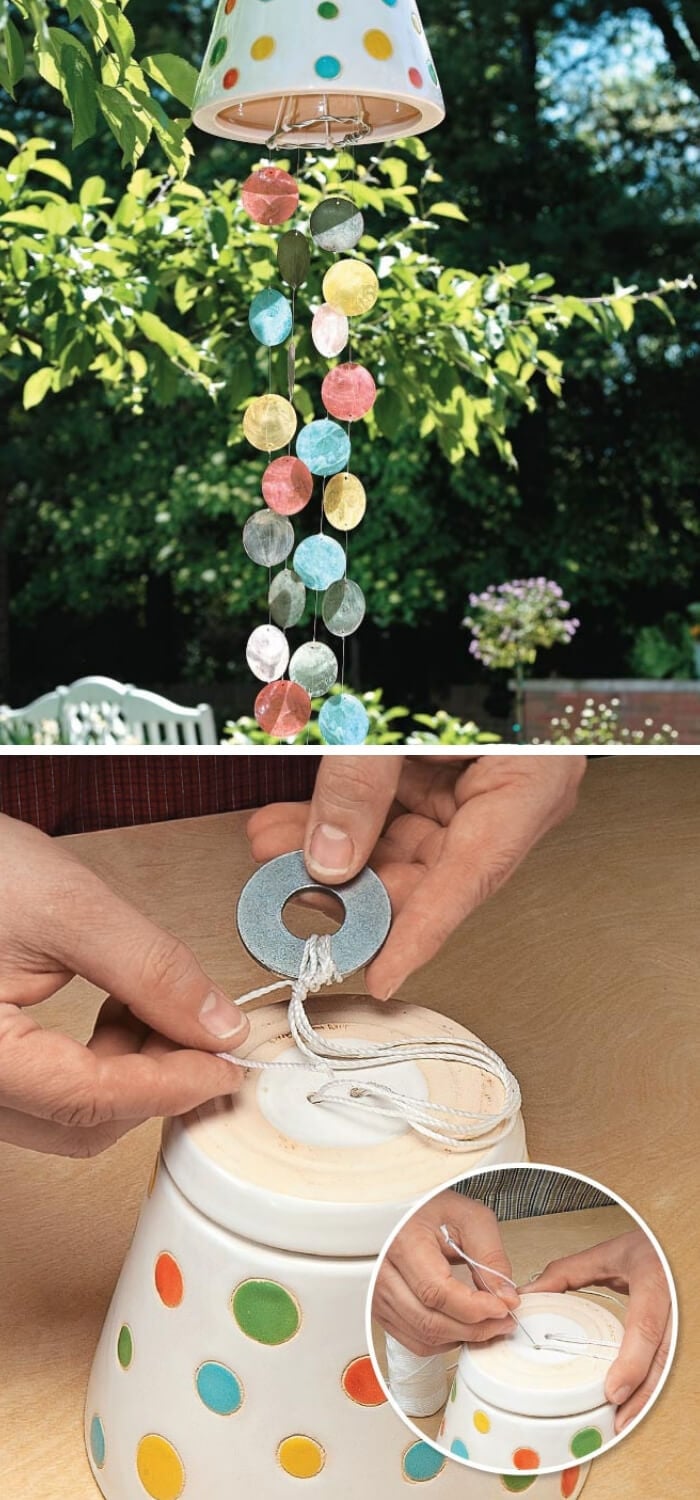
Vibrant painted chimes instantly brighten shaded pergolas and deck nooks. Using durable outdoor acrylic paints on upcycled elements like metal washers, painted wooden beads, or small tin cans allows you to create high-contrast color palettes tailored to your garden flowers.
2. Wind Chime Sun Catcher Stained Glass Up-cycled
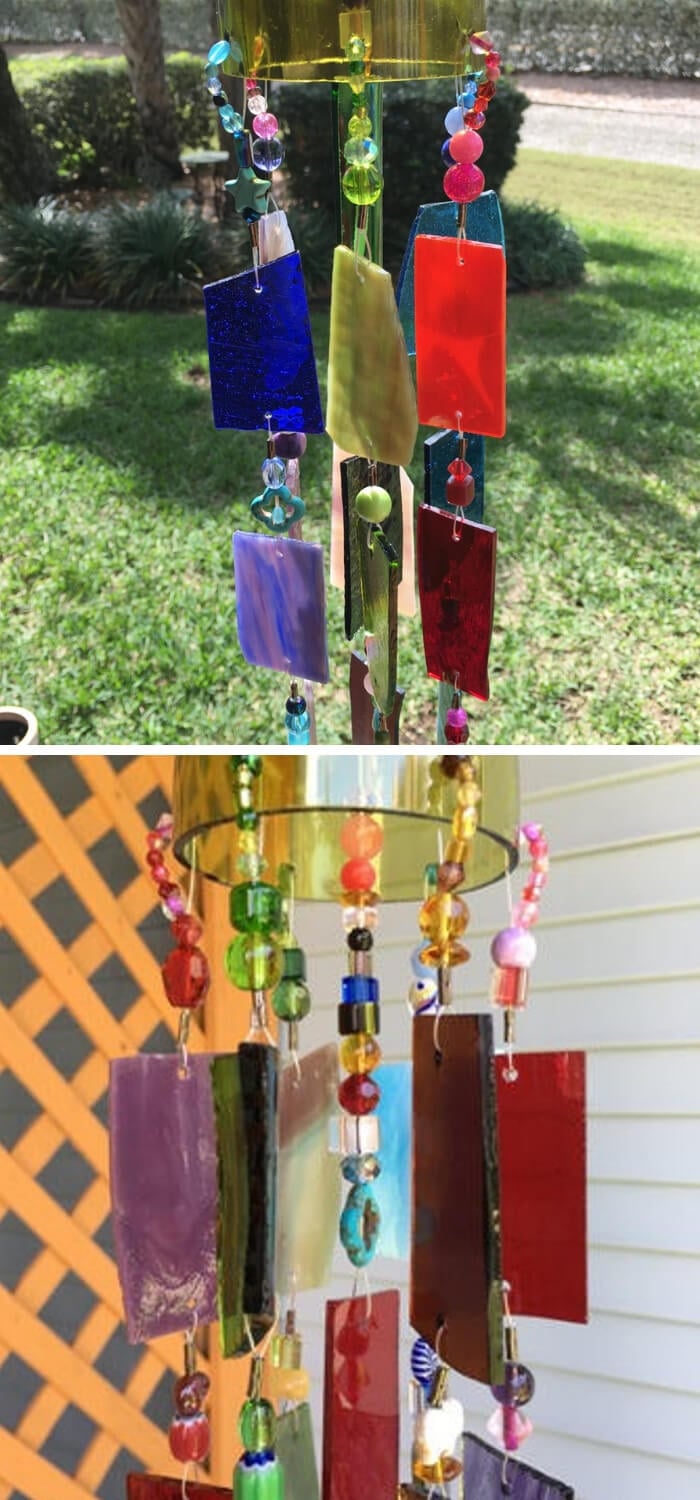
Combining the light-refracting beauty of stained glass with wind-activated motion creates a dual-purpose garden ornament. Stained glass remnants suspended on braided nylon thread catch direct sunlight and emit gentle, crisp clicking sounds when breezes blow through.
3. Glass Mosaic Wind Chime
Mosaic wind chimes use small tiles, tumbled sea glass, or repurposed ceramic shards bonded to a central base. When finished with waterproof grout and paired with dangling glass pendants, they offer textured geometric beauty and bright, ringing tones.
4. DIY Melted Bead Craft Wind Chimes
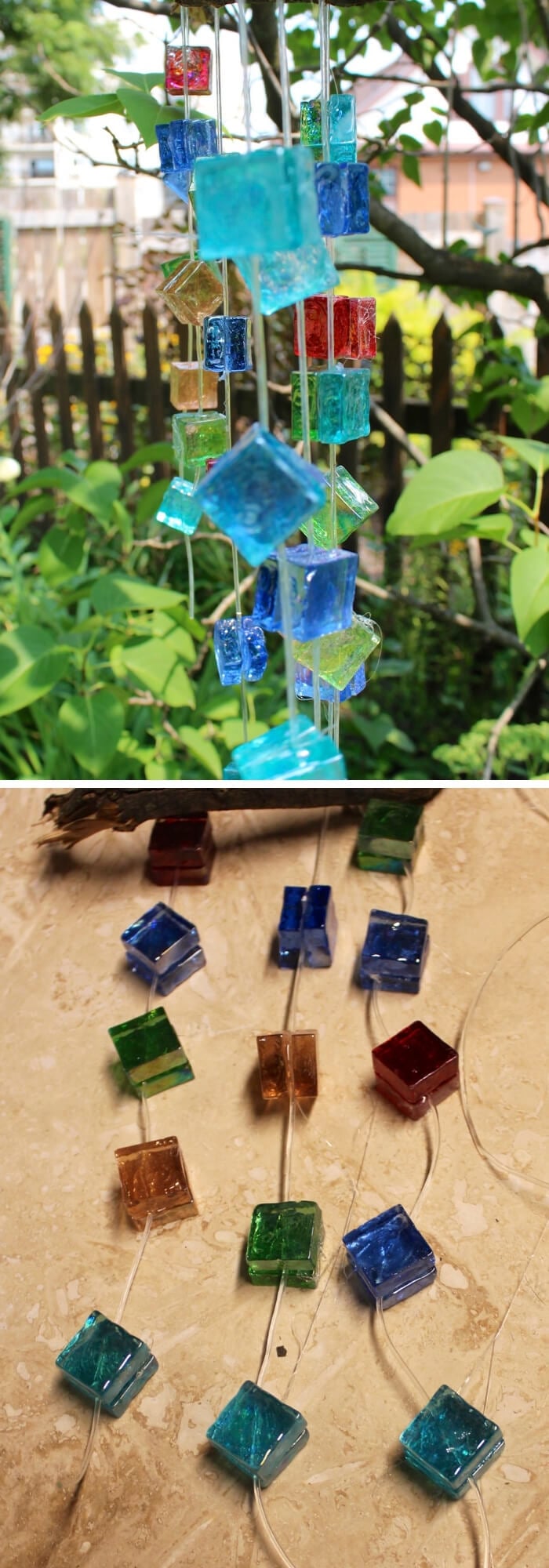
Baking colorful translucent plastic craft beads in metal baking tins creates durable, translucent sun-catching discs. Strung together with weather-resistant monofilament fishing line, these melted bead discs produce a gentle rustling clatter reminiscent of ocean breezes.

5. DIY Key Wind Chime for Kids
Repurpose spare, unassigned brass and steel keys by painting them with vibrant enamel coats and hanging them from a sturdy branch or wooden ruler. Keys produce bright, cheerful metallic ringing tones and make a fantastic weekend craft for young gardeners.

6. Bottle Cap Wind Chime
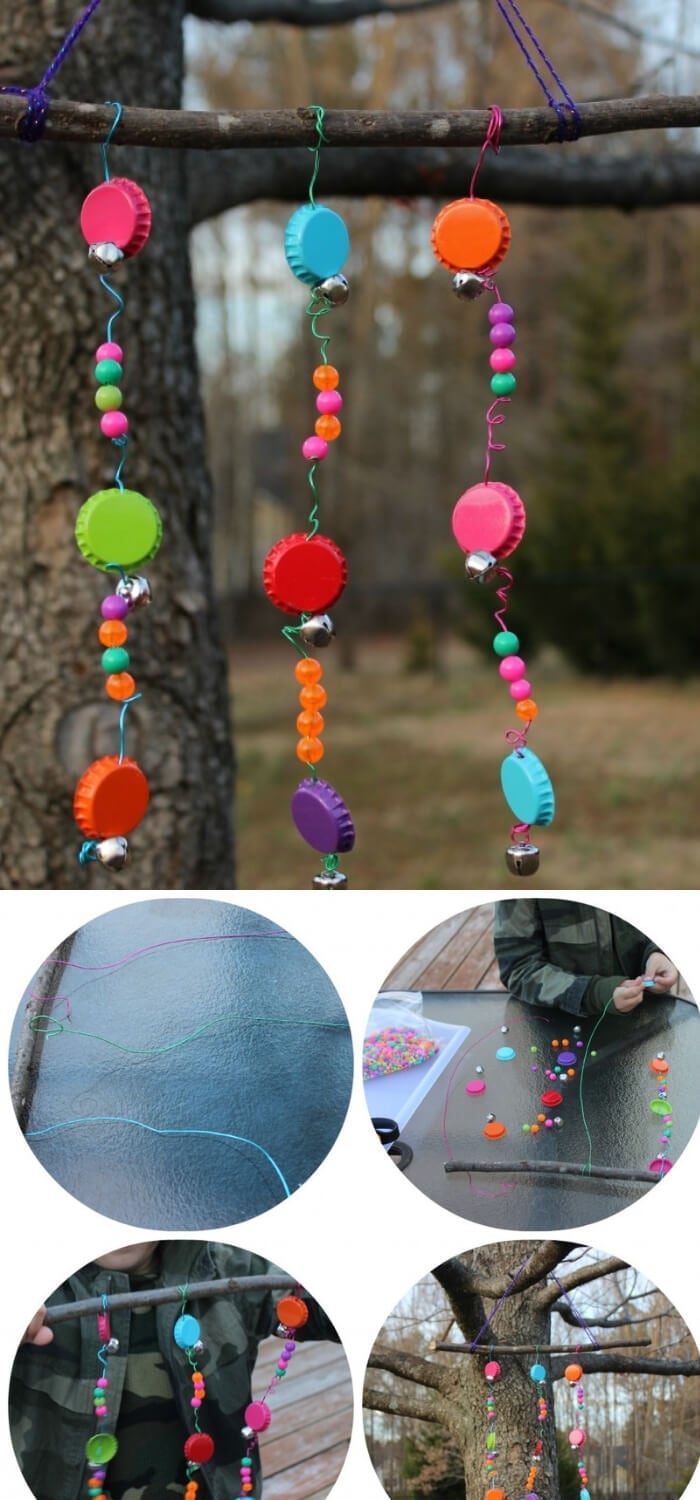
Save metal bottle caps from beverages, punch small holes through their centers, and link them using lightweight craft wire or jump rings. Cascading strands of stamped metal caps deliver a rustic, industrial aesthetic and a distinct, rapid percussive sound.
7. DIY Sun catcher/Wind chime
By blending faceted glass crystals, beads, and polished metallic chime rods, this hybrid design maximizes light reflection and melodic resonance. Hang it in direct morning sun to cast prism patterns across your patio while enjoying clear, bell-like tones.

8. DIY Silver Goblet Wind Chimes
Vintage silver-plated goblets, cups, and spoons salvaged from thrift shops create elegant, bell-like chime assemblies. Suspending inverted goblets with an internal cutlery striker yields deep, resonant ringing notes that carry across large garden spaces.

9. Balsa Wood Fall Wind Chimes
Balsa wood cutouts shaped like autumn leaves, geometric tiles, or strips provide a warm, organic clatter. When sealed with an exterior clear coat, lightweight wooden pieces react to the slightest draft, producing a gentle, hollow percussion.
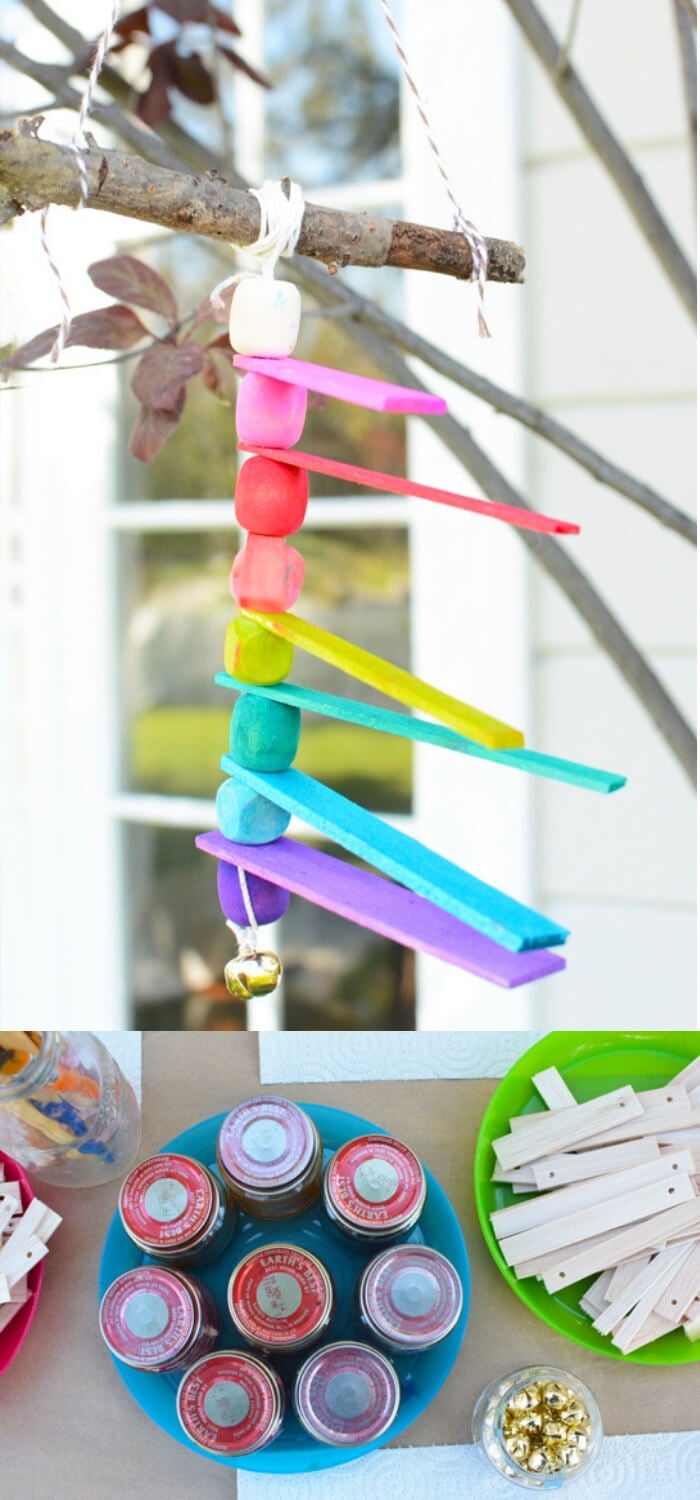
10. DIY Clay Wind Charm
Hand-modeled air-dry or oven-bake polymer clay charms allow for total customization in shapes, textures, and earthy tones. Strung on natural hemp twine, low-fire ceramic and clay pendants create muted, soft clicking sounds ideal for quiet reading gardens.

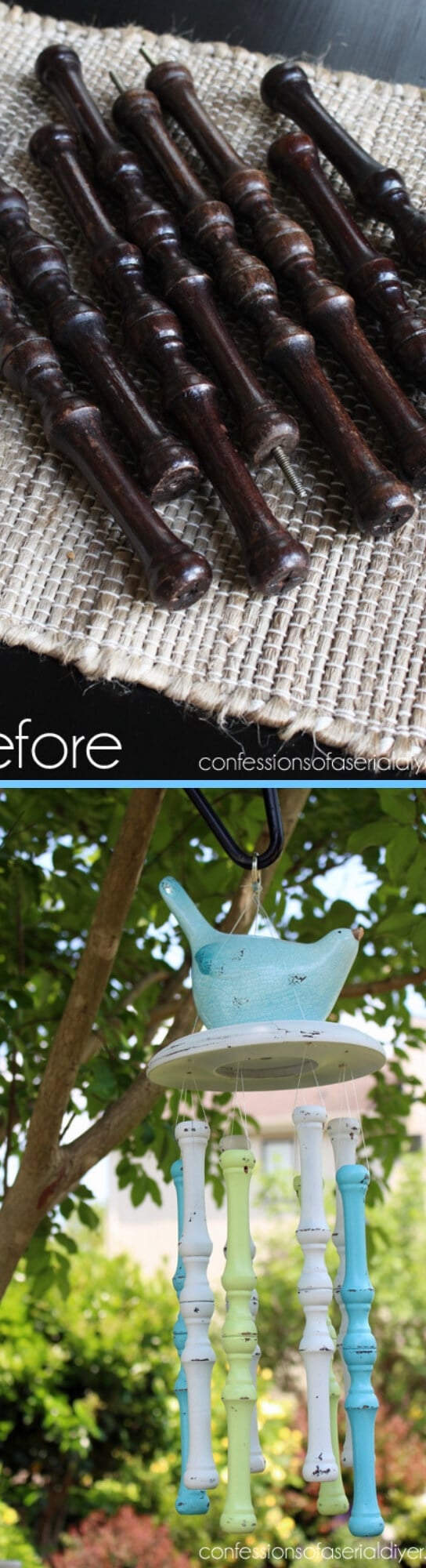
11. Spindle Wind Chimes
Salvaged wooden staircase balusters and furniture spindles can be cut to graduated lengths, painted, and hung around a circular wooden disc. Spindles create heavy, rich wooden knocking tones that bring architectural farmhouse character to your porch.
12. DIY Japanese Inspired Wind Chimes
Inspired by traditional Japanese furin chimes, this minimalist design features a delicate glass or ceramic bell paired with a suspended paper or fabric wind-catcher strip underneath. The elongated strip catches subtle breezes to produce sparse, meditative, and peaceful notes.

13. DIY Wind Chimes
Crafted using basic wooden craft sticks, geometric dowels, and wooden beads, this clean, contemporary project is straightforward to construct. It serves as an excellent entry-level project for learning fundamental suspension balance and string knotting.
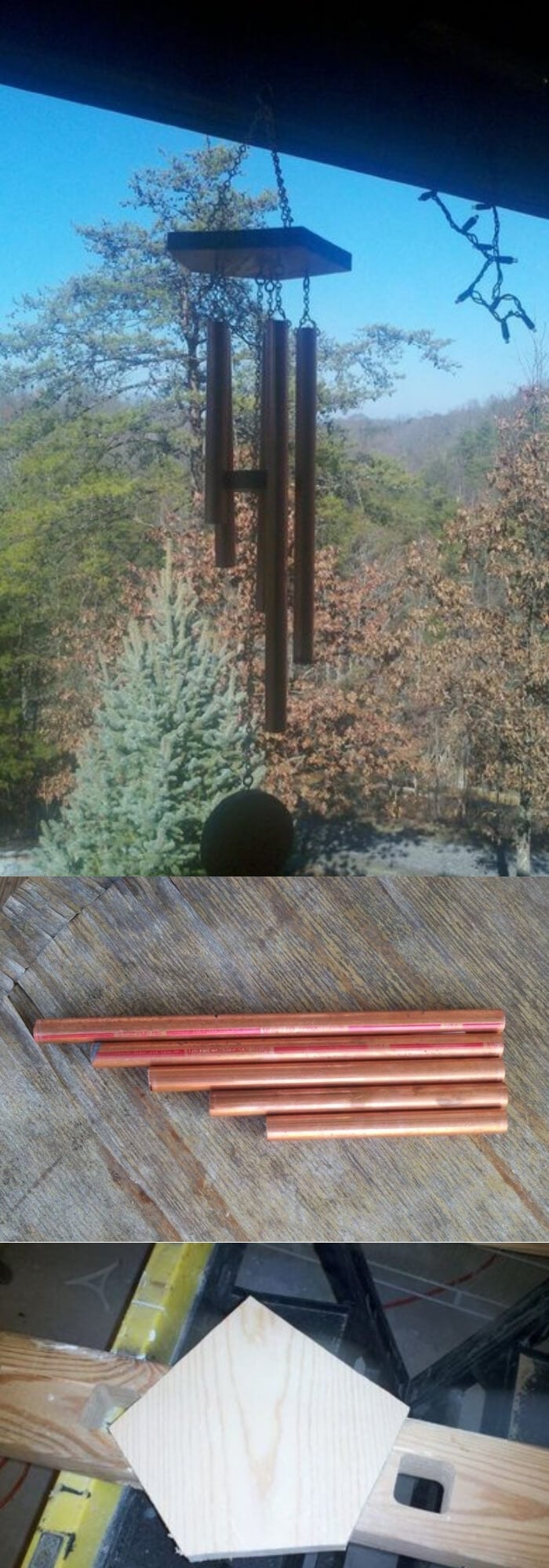
14. Copper Tubing Wind Chime
Plumbing-grade copper pipes cut to mathematically proportional lengths yield rich, professional-grade musical tones. As the copper ages outdoors, it develops a handsome turquoise patina while providing deep, sustain-rich harmonic ringing whenever the clapper strikes.
15. Wind Chimes From Kitchen Cupboard Items
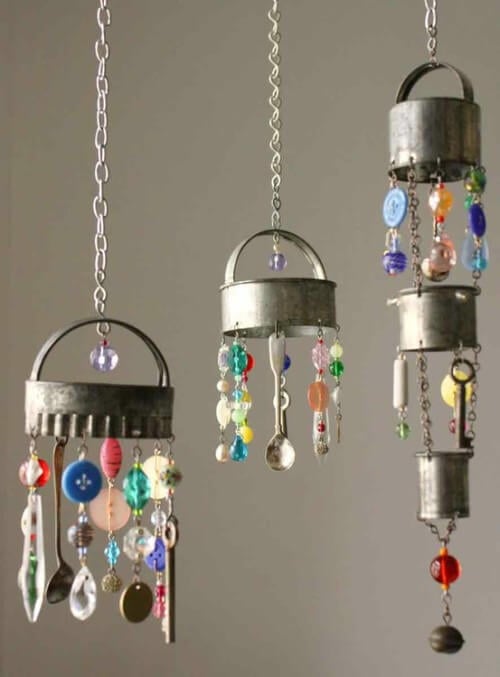
Raid kitchen drawers for mismatched vintage whisks, measuring spoons, aluminum strainers, and tea infusers. Suspending stainless steel cutlery beneath a colander or cake mold produces an eclectic conversation piece with bright, multi-tonal chiming.
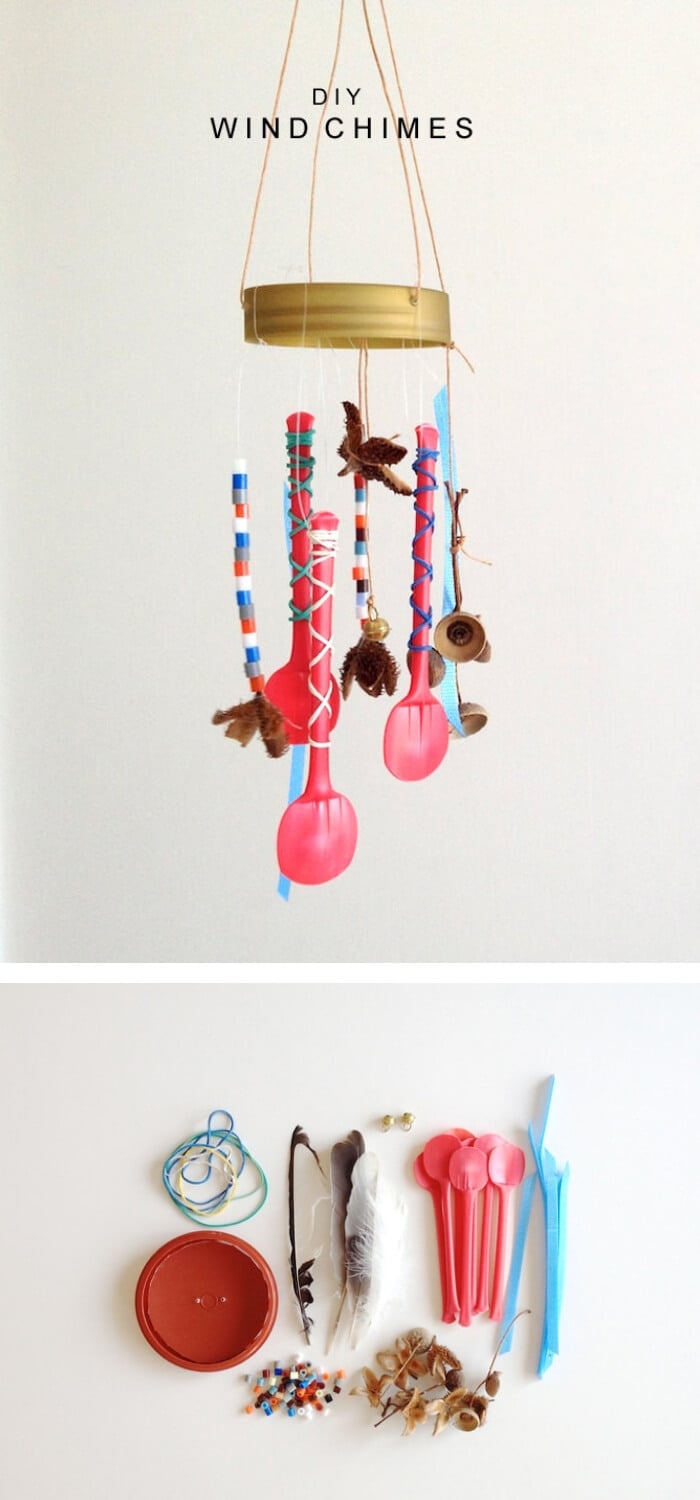
16. DIY Wind Chimes
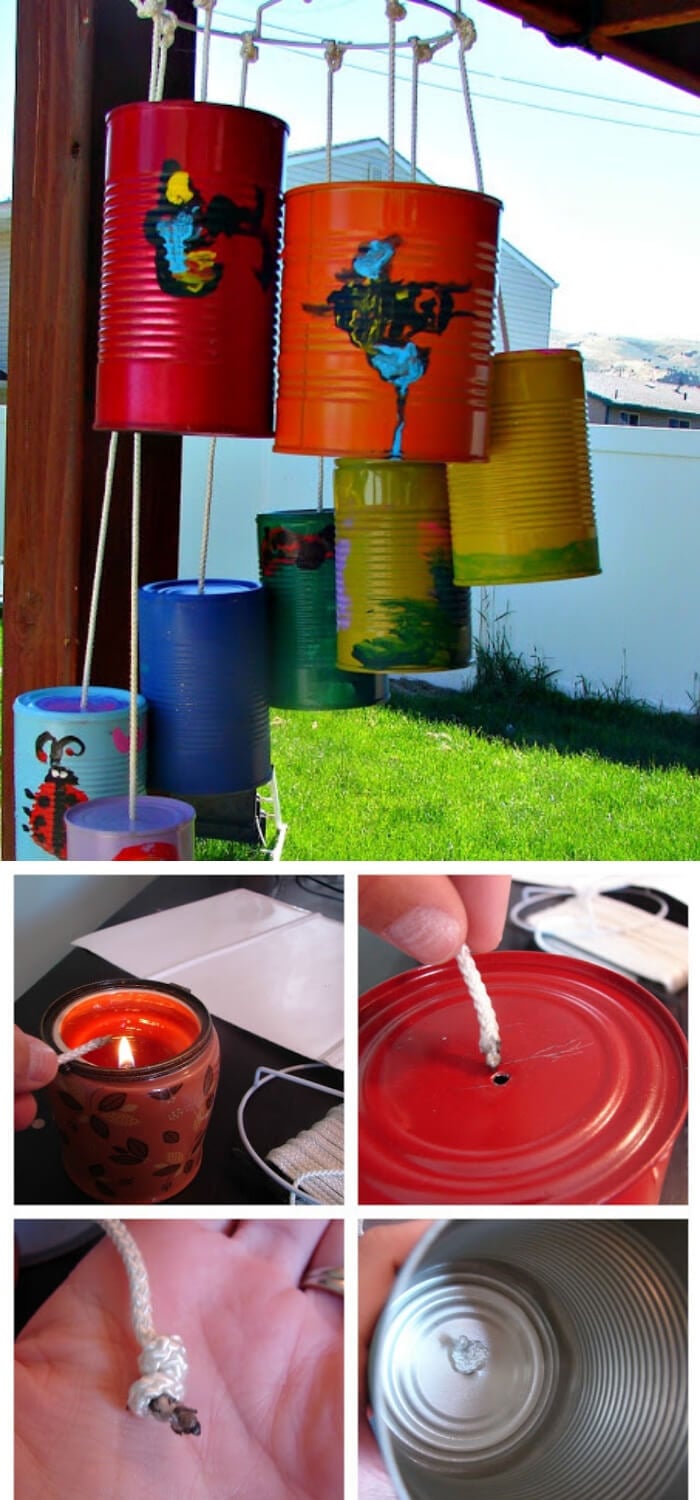
Upcycled aluminum beverage cans, painted jar lids, and lightweight craft bells come together in this lively garden mobile. Its lightweight construction responds instantly to gentle summer breezes, making it ideal for low-wind courtyards and covered porches.
17. Terracotta Flower Pot Wind Chime
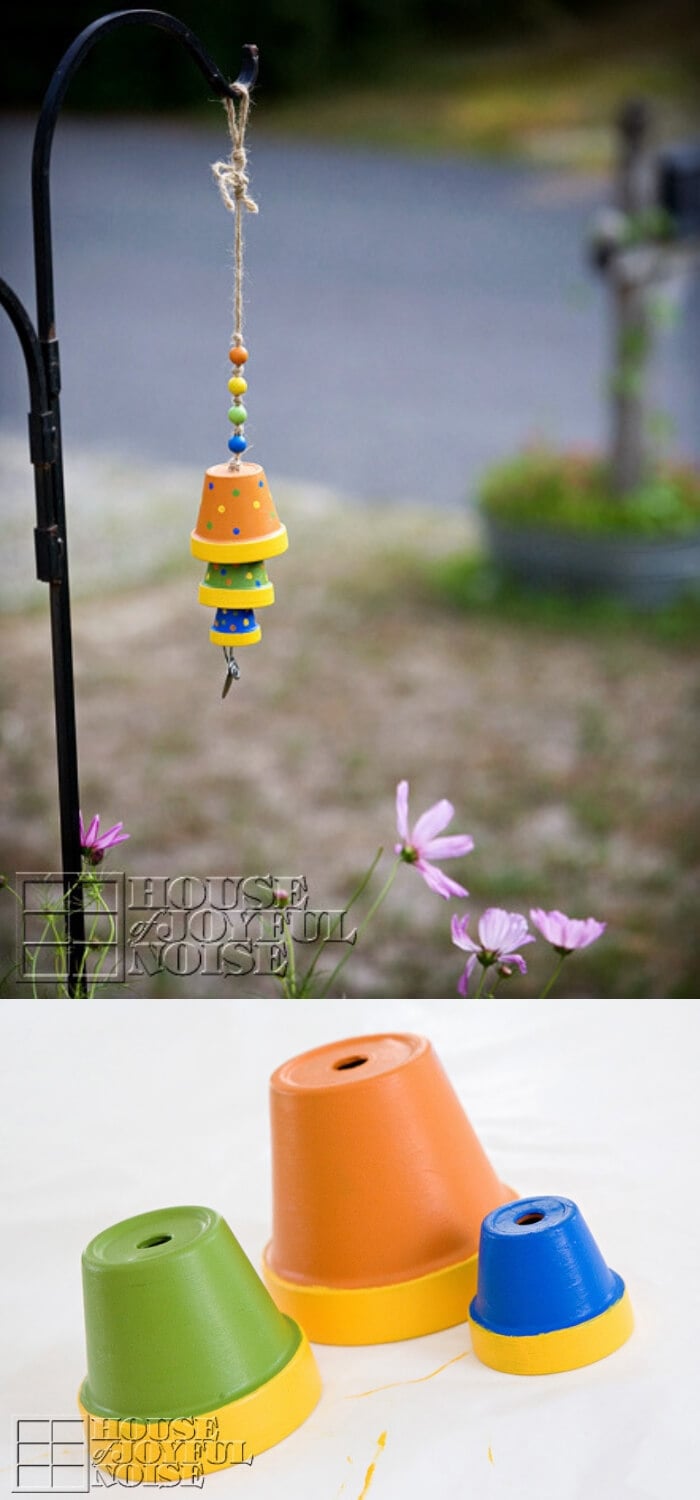
Graduated terracotta clay pots nested upside down on a central cord create a timeless garden ornament. When suspended with wooden or clay strikers between the pots, the porous clay yields a grounded, earthy, bell-like ring that complements potted patio gardens.

Frequently Asked Questions
What is the best cord or string to use for outdoor wind chimes?
Braided nylon string, polyester cord, or high-test monofilament fishing line (40 to 80 lb test) work best because they resist UV degradation, fraying, and moisture damage far better than natural cotton twine or jute.
Which materials produce the clearest, longest-lasting acoustic tones?
Hollow metallic pipes made of copper, aluminum, or brass produce the clearest musical sustain. Clay, terracotta, and dense hardwoods create deeper, more percussive tones, while glass and seashells produce gentle clicking sounds.
How do I keep my wind chimes from tangling in heavy winds?
Keep suspension strands shorter, increase the spacing between hanging points on the top disc, and use slightly heavier clappers and wind sails to maintain downward line tension during turbulent gusts.
Do wind chimes need to be sealed for outdoor weatherproofing?
Yes. Wood, painted terracotta, and unpolished metals benefit greatly from an exterior-grade clear UV-resistant polyurethane or enamel sealer to prevent water rotting, rust, and paint flaking over time.
Where should a wind chime clapper be placed for the best sound?
For cylindrical tube chimes, the central striker (clapper) should ideally hang so that it strikes the tubes at roughly 75% to 80% of their length from the top suspension point, maximizing fundamental resonant frequency.